NEWS DryvIQ brings content intelligence and governance to the Nasuni File Data Platform. See the launch news
Request a demo
Learn Blog Trends & expert takes on enterprise AI content Whitepapers Deep-dive guides Webinars Upcoming and on-demand sessions Proof Customer Success Stories Outcomes in the field Expert Services Guidance & delivery Microsoft Marketplace Transactable on Azure Stay current News Announcements & press Events Where to find us
Upcoming Webinar
One Content Problem, Two Rising Costs
Learn how duplicate and outdated content contributes to both rising storage and AI costs - and what you can do about it now.
November 10 | 2pm ET Register today
About Us Better outcomes, faster — unstructured content is our expertise Careers Build the content foundation for AI Newsroom Press, coverage & announcements Contact Us Talk to our team
10+ yrs
Governing enterprise unstructured content
Global 1000
Enterprises in regulated industries
Petabyte scale
Across 40+ content systems
We're hiring
Join the Dryvers.
Trusted by leading global enterprises to make their content secure, governed, and AI-ready.
See open roles

File Migration Success Without Getting Burned: 7 Best Practices

We all know what happens when you play with fire.

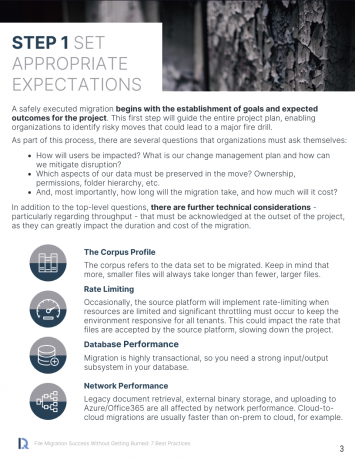
Take a deep dive into the importance of setting appropriate expectations for your migration project; how to analyze, understand and prioritize your data; and how to identify and mitigate risks that might burn you along the way.

Based on our experiences completing incredibly complex file migrations for some of the world’s largest enterprises, this whitepaper shares the seven best practices that our team has discovered that organizations of any size should employ for a successful project.

You will learn how to:

  1. Set appropriate migration expectations
  2. Assess your data prior to migration
  3. Understand the business value of your content
  4. Analyze your IT environment
  5. Determine your migration approach
  6. Build your migration project plan
  7. Identify and prepare for common risk